
Proper Tree Care for Healthy Growth
For your tree to grow healthily, it is essential to provide the right care. The first three to five years are crucial for its survival and well-being. To ensure optimal development, your tree will need nutrients, water, light, and sufficient space to thrive. Below, you will find the various care steps to follow.
Watering
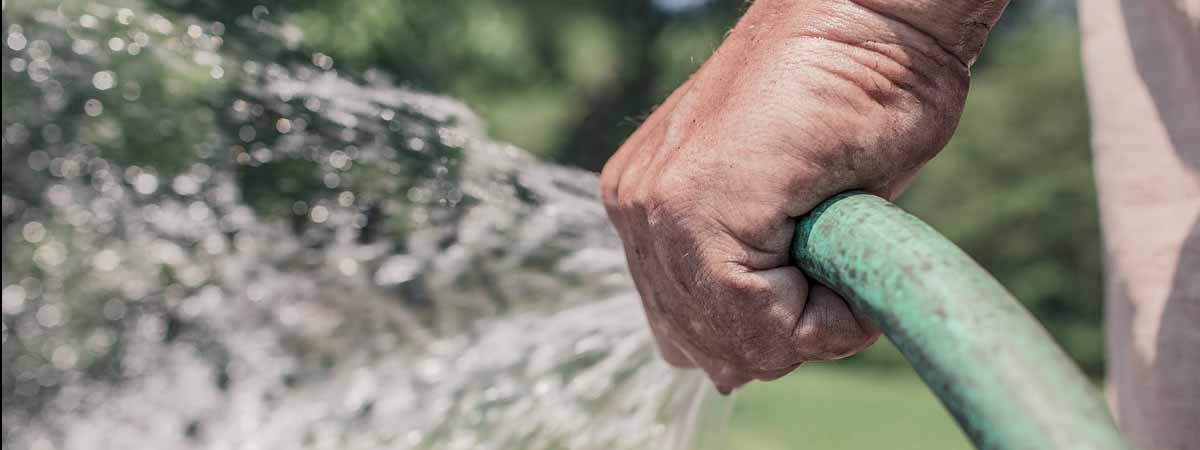
To prevent root dehydration, some tree varieties require more frequent watering. It is important to research your chosen tree species to ensure proper watering, as this greatly increases its chances of survival. Several factors can influence the amount of water needed, such as soil type, tree variety, and recent precipitation levels.
- Water drains quickly in sandy soil, requiring more frequent watering.
- In contrast, clay soil retains water at the surface longer before it infiltrates deeper, meaning less frequent watering is needed.
Ensure that water penetrates the soil slowly, allowing roots to grow deeper and providing better support for the tree.
Weeds and Mulch
During the early years of your tree’s life, it will compete with nearby vegetation. Removing all weeds and other plants around the base of the tree is crucial. We recommend applying a 4-inch (10 cm) thick layer of mulch at planting to limit weed growth. Leave a 2-inch (5 cm) gap around the trunk to prevent insects and diseases from affecting the tree.
Rodent and Animal Protection
Seedlings and saplings are vulnerable to animals such as deer, rabbits, mice, and other rodents, which may eat young shoots or even strip the bark, endangering the tree’s health. To prevent damage, you can install a non-toxic rodent-repellent tape. A tree guard can also help protect against pests and can be purchased at nearby nurseries.
Staking
Some trees may need staking for additional support, especially in strong winds, to prevent trunk displacement. Staking must be done correctly to avoid harming the trunk. The stake should be attached to the lower part of the tree using a rubber tie or other flexible material, allowing movement while providing support.
- Larger trees may require multiple stakes.
- Generally, a single stake placed on the windward side is sufficient for smaller trees.
- The stake should be checked annually and removed after a few seasons.
- If the soil is deep enough or the tree is in a wind-protected area, staking may not be necessary.
Training Pruning
During the first two to three years following planting, only dead or broken branches should be pruned to minimize stress. After the tree has fully recovered from transplant shock (approximately two to three years post-planting), training pruning can be performed to improve its structure.
Training pruning is beneficial long-term because it helps shape the tree properly while maximizing its health and structural integrity. Once mature, a tree that was pruned early will require less corrective pruning compared to one that did not receive early shaping.
For further details, visit our blog on training pruning. It is highly recommended to consult arboriculture specialists to ensure pruning is done correctly.
At Arboquébec, we provide planting and training pruning services. Visit our Planting and Training Pruning sections for more information.
Source :
https://treecanada.ca/wp-content/uploads/2017/10/Guide-2-FR-plantation-et-soin-de-les-arbres.pdf