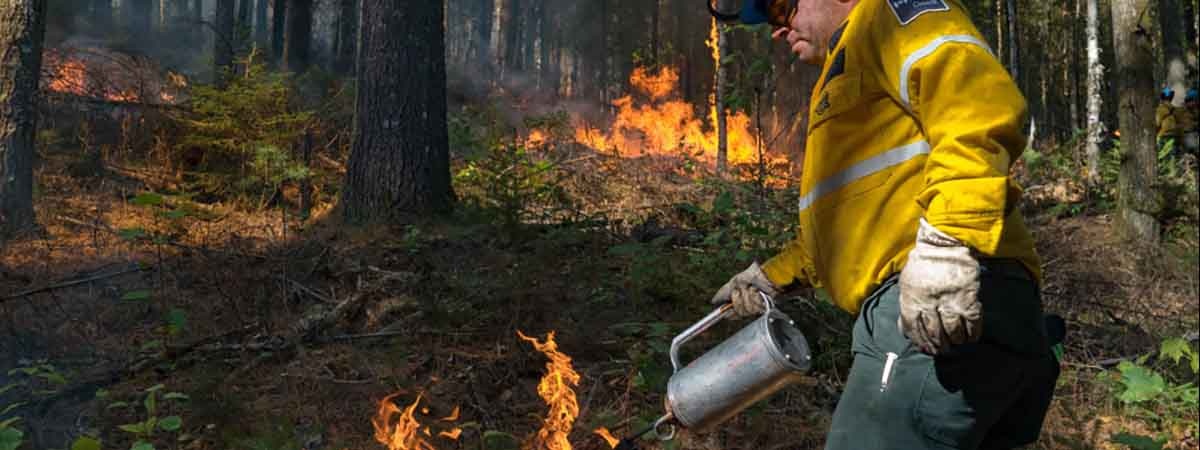
Who would have thought that this force of nature, which destroys everything in its path, could have a positive impact on forests? Yet, in some cases, it is essential.
Since 1991, Parks Canada has implemented a prescribed burning program for certain forests. The Mauricie National Park is one such example. The goal is to enable the seeds of certain pine species to disperse by melting the resin that keeps them sealed within their cones, thereby releasing the seeds. This is the case for jack pine. For white pine and red oak, fire eliminates competing vegetation, allowing young shoots to establish themselves. It also helps open the forest canopy, providing sufficient light for new growth to thrive.
Fire's Role in Ecosystem Regeneration
Beyond aiding pine and oak regeneration, wildfires are necessary for ecosystems. Ash deposits enrich the soil by creating natural fertilizers for seedlings.
Wildlife Benefits
The entire fauna benefits from fires. Some insects, like beetles, colonize burned areas, which in turn attract woodpeckers. Wild fruits also flourish abundantly after a fire, drawing in bears and moose.
The Long-Term Impact of Controlled Burns
Thanks to controlled fires, future generations will reap the ecological benefits. Prescribed burns may seem destructive, but they play an essential role in forest renewal and biodiversity conservation.
Picture : Martin Thibault