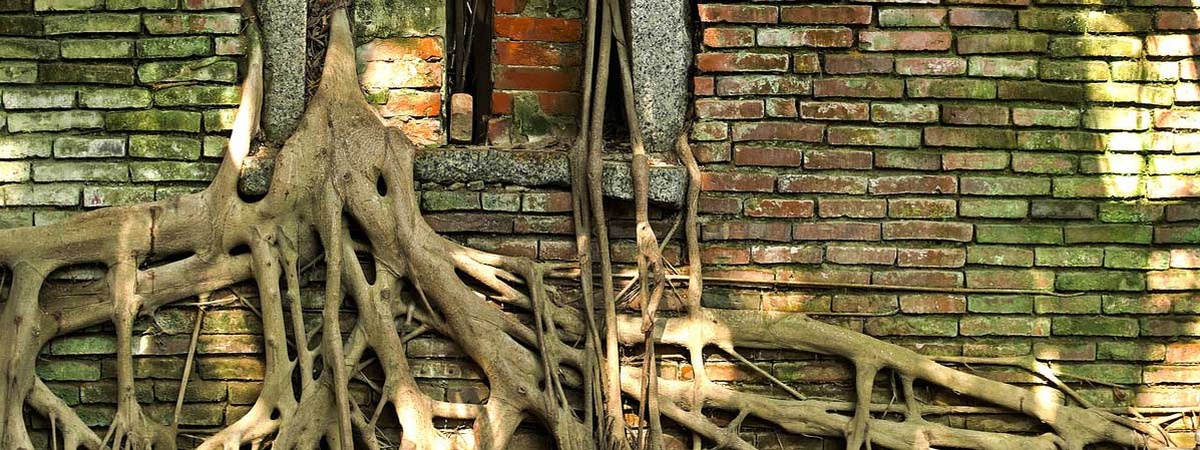
Tree roots are often blamed for causing problems: damage to house foundations, soil drying near homes, clogged or broken drains, struggling grass, and more. Here, we will try to demystify these claims so that urban trees are not needlessly removed and continue to be valued appropriately.

It is often said that a tree has cracked or damaged a foundation wall. To understand this claim, let's compare tree roots to the roots of a potted plant. Have you ever seen or heard of a plant breaking or bursting its pot? What typically happens when a plant lacks space is that its roots grow through drainage holes.
The same principle applies to tree roots and foundations. When growing, roots remain thin and delicate, similar to those of a houseplant. They do not possess the strength to break solid materials. However, if a foundation already has cracks or openings, roots may penetrate these gaps, just as plant roots can extend through holes in a pot. The cracks could have been caused by freeze-thaw cycles or structural weaknesses, not by the tree itself.
So why does the myth of tree roots breaking foundations persist? Often, when homeowners experience water infiltration problems, they search for a culprit. If roots are found inside a foundation crack, they are immediately blamed, even if the cracks were pre-existing.
It is also frequently heard that tree roots have clogged or broken a residence's sewer lines. We will attempt to shed some light on this problematic situation so that trees are not once again unfairly blamed and unnecessarily removed.
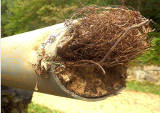
Similar to house foundations, trees do not break intact sewer pipes. Roots grow from soft tissues called radicles, which lack the ability to destroy solid structures. A well-maintained and watertight sewer pipe prevents root intrusion.
If plumbing issues arise, it is essential to consult a professional to identify the actual cause. If roots are found inside a damaged pipe, replacing the pipe, rather than cutting down the tree, is the correct solution. Removing the tree will not fix the underlying problem, and blockages may recur due to pipe deterioration or improper installation.
Sewer systems require regular maintenance, repair, or replacement as they degrade over time due to soil pressure, ground vibrations, and wear. Leaky joints are the primary cause of serious damage necessitating sewer repair or reconstruction.
Regardless of the tree species planted, roots can enter faulty sewer systems, reinforcing the idea that tree-related damage is often an urban myth.
Foundation drains are perforated pipes installed around foundation walls, connected to stormwater sewers to remove excess water.
Over time, foundation drain pipes can fill with soil particles, forming thick layers that hinder water drainage. Some soil types cause chemical reactions that clog pipe surfaces and perforations, preventing proper water flow.
Foundation drains should be cleaned by professionals. Since roots require soil to grow, they do not develop in empty foundation drains. Excavation and replacement may be required in some cases, but landscaping should always direct water away from foundation walls to reduce issues.
To preserve trees, certain repair techniques allow fixing pipes from the inside. A plumber can assess the situation and recommend the best course of action.
Some believe that trees dry out soil, leading to ground settlement and foundation damage. While this notion seems logical, it does not align with reality.
In urban areas, soil drying is primarily caused by asphalt and concrete, which redirect water into streets via slopes and drainage systems. Contrary to myths, trees do not actively seek water underground, sending roots toward houses. In reality, the majority of tree root systems, regardless of species, remain within the top foot of soil.
During droughts, trees conserve energy by closing their stomata (tiny leaf pores), minimizing water loss through transpiration. By providing shade, large trees help retain soil moisture and prevent excessive ground compression near foundations.
In cases of extreme drought, watering vegetation around homes can be beneficial.
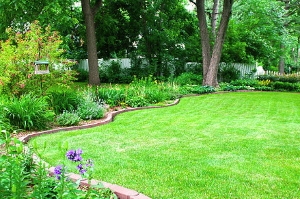
Some claim trees absorb all the water, causing grass to suffer. However, the main factor affecting grass growth under trees is lack of sunlight.
Using mulch around trees offers multiple benefits and helps support surrounding vegetation. If maintaining a lush lawn under a tree seems impossible, consider mulch or shade-tolerant ground cover plants.
In conclusion, our years of experience in arboriculture have shown that many tree-related myths are deeply ingrained. We hope this explanation has helped clarify some common misconceptions.