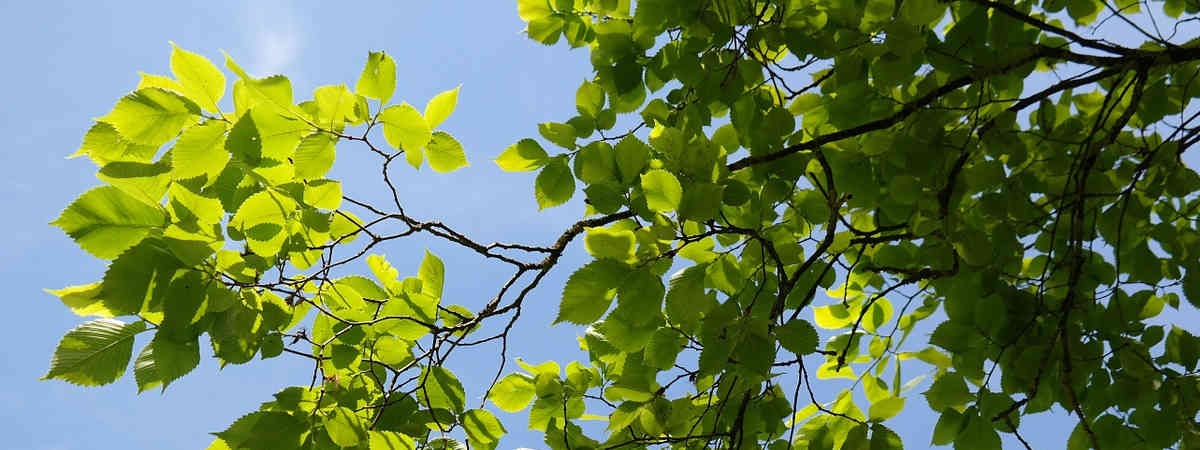
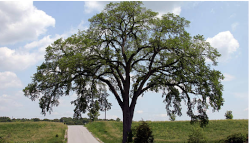
This disease primarily affects the American elm but also impacts other elm species, including white elm, cork elm, and red elm. It is caused by a microscopic fungus (Ophiostoma ulmi) that releases toxins, blocking the tree’s vascular system and preventing sap from reaching the upper branches. The fungus poisons the tree by spreading toxins. It is carried by insects known as bark beetles, which belong to the weevil family and the order Coleoptera. These beetles tunnel under the bark, allowing the fungus to spread through their galleries. When the insects leave infected trees, they search for food, landing on new trees and bringing the fungal spores with them.
The disease is found in nearly all Canadian provinces and across the United States. In Ontario, it has nearly wiped out the elm population.
how does the disease spread?
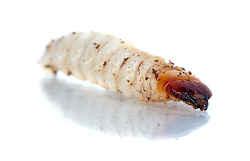
An elm infected with dutch elm disease threatens all nearby elms. When an infected elm is cut down, the disease can spread further. The primary method of transmission is through bark beetles, which carry and distribute the fungal spores responsible for the disease. This is the main source of infection.
Roots also play a role in transmission. When a healthy elm forms root grafts with an infected elm, the disease spreads through their now-merged root systems. Lastly, human activity can contribute to the spread by using contaminated tools during pruning or transporting infected firewood and logs can introduce the fungus to new trees.
what are the signs and symptoms of dutch elm disease?
This disease kills elms very quickly. Symptoms begin to appear between June and early July. One of the main signs is the yellowing and wilting of leaves at the tips of branches. The leaves then turn brown and curl inward. They remain attached to the tree but eventually fall.
The following year, leaves may regrow but in a much weaker state, smaller in size and fading more quickly compared to previous years, or may not regrow at all. When an infected branch is cut, a brown ring is often visible, and brown streaks may appear beneath the bark.
how can dutch elm disease be controlled?
Once the disease starts spreading, infected branches should be pruned and destroyed. There is also a fungicide treatment available to protect elms from the microscopic fungus responsible for dutch elm disease. This treatment must be applied every three years.
We recommend consulting a professional arborist to administer the fungicide treatment if you wish to preserve the health of your tree.
Sources
https://aimfc.rncan.gc.ca/fr/maladies/fiche/10
https://arbrescanada.ca/ressources/destructeurs-arbres/maladie-hollandaise-de-lorme/